Zhangjiajie National Forest Park: Everything a First-Timer Actually Needs to Know (2026)
This guide covers independent travel to Zhangjiajie National Forest Park for foreign visitors. It does NOT address the Fenghuang Ancient Town extension, Tibet combo routes, or group tours arranged through Chinese domestic agencies.
Zhangjiajie National Forest Park is a UNESCO World Heritage Site in Hunan Province, China, famous for its towering quartz-sandstone pillars rising from dense forest. The park — officially China’s first national forest park, established in 1982 — covers roughly 4,810 hectares and is widely recognized as the real-world landscape that inspired the floating mountains of the film Avatar. It allows a maximum of 53,000 visits per day, and an entry ticket is required for anyone 14 years of age or older.
People who’ve done the research before arriving still get surprised. Not by the mountains — those deliver — but by how different the experience is when you haven’t sorted out tickets, zones, and payment as a non-Chinese visitor in advance. This guide exists to close that gap.
What You’re Actually Looking At — The Avatar Mountains Explained
The park’s identity is inseparable from that film, and that’s fine. What the viral videos don’t show you is the scale. There are over 3,000 sandstone pillars here, some exceeding 200 metres in height. The most photographed — the column now formally renamed “Avatar Hallelujah Mountain” after the 2009 film — sits in the Yuanjiajie area. But Yuanjiajie is one of four distinct zones inside the park, and treating the whole place as one stop is the most common planning mistake first-timers make.
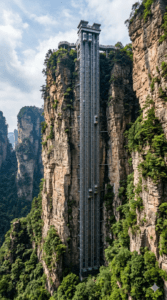
Zhangjiajie National Forest Park is a UNESCO World Natural Heritage Site, and its most notable feature is the unique sandstone peak forest landforms. The park is genuinely unlike anything else on the planet. That said, most people assume the best views require physically difficult hiking. The data says otherwise — the Bailong Elevator and the Tianzishan Cable Car deliver you to the most dramatic viewpoints in under ten minutes, and both are accessible to most travelers.
Or maybe I should say it this way: you could visit Zhangjiajie for four days and not repeat a single view. That’s the argument for understanding the zone structure before you book anything.
The Four Park Zones — What They Are and Which One Is for You
Most guides cover Yuanjiajie and stop there. That leaves Tianzi Mountain, Golden Whip Stream, and Ten-Mile Gallery either unmentioned or dropped into a single paragraph. Each zone is a distinct experience.
Quick Comparison
| Zone | Best For | Key Benefit | Limitation |
|---|---|---|---|
| Yuanjiajie | Avatar fans, first visit | Hallelujah Mountain, Bailong Elevator access | Most crowded zone in the park |
| Tianzi Mountain | Panoramic views, fewer crowds | Sea-of-cloud mornings, cable car access | Less dramatic up-close pillar density |
| Golden Whip Stream | Valley-floor walking, nature | 7.5 km trail through gorge, wildlife | No cable car — walking only |
| Ten-Mile Gallery | Quick highlights, families | Open-air scenic train, manageable terrain | Less immersive than the upper zones |
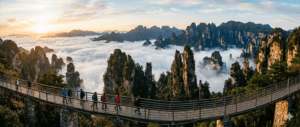
Yuanjiajie is where most people spend their first morning, and understandably so. The Bailong Elevator — a Guinness World Record holder as the world’s tallest outdoor lift at 326 metres — deposits you directly onto the ridge. From there, the bridge at First Bridge Under Heaven and the view platform facing Hallelujah Mountain are a short walk. Arrive before 9am if you can. The crowds after that are serious.
Tianzi Mountain is the zone competitors skip, and it shouldn’t be. The area is particularly atmospheric in autumn, when the mist-shrouded mornings give way to crisp, clear afternoons. The Tianzishan Cable Car rises from the park’s east gate and takes eight minutes. You get broader, more panoramic views than Yuanjiajie, with noticeably thinner crowds on weekdays. Photographers who’ve visited both areas often say this is the better zone. That’s a defensible opinion — though visitors who want the Hallelujah Mountain icon specifically will disagree.
Golden Whip Stream is the valley-floor trail that runs 7.5 kilometres between towering pillars at ground level. It’s the only zone requiring sustained walking. Monkeys approach visitors here. The trail is mostly flat and well-maintained, but it takes two to three hours and there’s no shortcut.
Ten-Mile Gallery is Zhangjiajie for people with limited time or mobility. An open-air scenic train runs the length of the gallery, with narration in Chinese. The views are beautiful; the experience is less immersive than the upper zones.
Entrance Fees and Tickets in 2026
The Zhangjiajie National Forest Park entrance ticket costs 225 yuan (about 32 USD) for a 4-day pass. This pass includes free shuttle buses within the park but does NOT cover the Bailong Elevator (72 yuan each way) or cable cars (65–76 yuan each).
From June 2025, Zhangjiajie National Forest Park has required that each visit be reserved in advance, with the purpose of efficiently managing tourism volume and directing tourist flow. This is a recent change most travel blogs haven’t caught up to. Book your entry slot before you arrive, particularly in the high season between May and October.
Quick note: Tianmen Mountain is entirely separate. It has its own ticket — around 258 yuan for the peak season — and is not accessible on the forest park pass.
A realistic 3-day trip budget for a mid-range traveler is about 1,200–1,750 yuan (roughly 170–250 USD) per person, excluding flights or trains to Zhangjiajie.
To buy tickets as a foreigner, follow these steps:
- Download Trip.com or GetYourGuide before arriving — both support international cards.
- Select your entry gate and date at the time of booking.
- Screenshot the QR code confirmation — park Wi-Fi is unreliable at entry gates.
- Arrive 15 minutes before your time slot; the reservation system is strict during peak season.
How to Actually Pay in China as a Foreign Visitor
This is the section no competitor article includes. Arrive without sorting this and you’ll find yourself standing at a ticket counter that accepts nothing but a QR code.
Since July 2023, WeChat Pay has comprehensively upgraded its services for international bank card users. After linking a foreign card, overseas visitors can use mobile payments at the majority of merchants across dining, transportation, hospitality, supermarkets, and more. Alipay rolled out the same change within 24 hours.
Here’s the thing: both apps now work, but both have quirks. The practical answer for 2026 is to set up both Alipay and WeChat Pay, backed by a small amount of cash and a physical card for hotels. Mobile QR payments are accepted almost everywhere, while foreign credit cards are still hit-or-miss in local places.
Transaction limits differ: Alipay allows a maximum of 3,000 yuan per single transaction, while WeChat Pay allows up to 6,000 yuan per transaction. For park tickets and cable cars, Alipay’s limit is sufficient. For hotel payments, WeChat Pay’s higher ceiling is useful.
I’ve seen conflicting data on which app links more reliably for Pakistani and South Asian cards. Some sources say Alipay is more stable for Visa; others point to WeChat Pay. My read: set up both before you leave home, using an international phone number to register. If you register on WeChat or Alipay using a Chinese phone number, the system defaults to assuming you’re a Chinese user and will require Chinese identification. Register with your own country’s number.
Trip.com and GetYourGuide remain the cleanest fallbacks for pre-booking park entry if mobile payment setup fails.
Best Time to Visit Zhangjiajie
The best times to visit Zhangjiajie are April and May in spring and September and October in autumn — these seasons offer a pleasant balance of comfortable weather and fewer crowds.
Most guides stop there. What they miss is the fog argument.
Zhangjiajie is foggy or rainy for over 200 days per year. The mists make the park mysterious — even on an obscured day, the scenery is beautiful. Travelers who arrive expecting blue-sky clarity and get morning fog often leave with the better photographs. The pillars emerging from cloud cover is the shot. A clear day is beautiful. A misty day is otherworldly.
Season-by-season breakdown:
Spring (March–May): Comfortable weather with fewer crowds — colorful spring flowers and verdant trees, though March can feel chilly and foggy until April. Best for independent travelers who want good weather without peak-season pricing.
Summer (June–August): Peak tourist season. Hot, humid, and expensive. In July 2025, there were 18 days when the maximum temperature exceeded 35°C (95°F). Avoid Chinese national holidays in this window — the park approaches its 53,000-person daily cap.
Autumn (September–November): The summer crowds disappear, temperatures cool, and rainy days lessen, revealing crisp air and stunning views. October offers some of the park’s most dramatic scenery. The Milky Way is visible in clear October nights above the ridgeline.
Winter (December–February): Quiet, cold, occasionally snow-covered. Fewer crowds. Some infrastructure runs reduced hours. Worth considering for budget travelers who don’t mind layering up.
Getting to Zhangjiajie
Zhangjiajie Hehua International Airport (DYG) has direct connections from major Chinese hubs including Beijing, Shanghai, Guangzhou, and Chengdu. Most international visitors fly into a major hub and connect.
High-speed train is the better option from Changsha (Hunan’s capital, about 3.5 hours) or Chengdu. The train deposits you at Zhangjiajie West Station, from which the city center is a 20-minute taxi ride.
Some experts argue that flying directly into DYG saves time. That’s valid for travelers arriving from Beijing or Guangzhou with a connecting flight. But for anyone coming overland from other parts of China, the train is more reliable, cheaper, and drops you closer to the accommodation clusters near the East Gate entrance.
Recommended Itineraries
2 days: Day 1 — Yuanjiajie via Bailong Elevator (arrive at East Gate, 8am). Day 2 — Tianzi Mountain via cable car, afternoon walk along part of Golden Whip Stream.
3 days: Add a full Golden Whip Stream day and Ten-Mile Gallery on day three before departure.
4 days: Include Tianmen Mountain as a full separate day. This requires a separate ticket and a different entry point; treat it as its own trip within the trip.
Where to Stay
Most foreign visitors stay in the Wulingyuan township area, within walking distance of the park’s East Gate. Budget guesthouses run 150–250 yuan per night. Mid-range hotels with English-speaking staff cluster around the central bus station. For a quieter stay, a handful of boutique properties sit closer to the Tianzishan entrance.
Avoid booking on Chinese-only platforms if you can’t read Mandarin — cancellation policies are sometimes unclear. Trip.com is reliable for this and most properties list there with English support.
Practical Tips for Foreign Visitors
No VPN, no Google Maps. Download your offline maps via Maps.me or the international version of Baidu Maps before entering the park’s mountain zones. Mobile signal is patchy above the ridgeline.
SIM cards: Buy a China Unicom tourist SIM at the airport. They’re sold at arrivals desks, include data, and the package is designed for short stays.
Language: English is limited outside major hotels and ticket counters. A translation app with an offline Chinese pack — DeepL or Google Translate downloaded offline — will handle most situations.
Cash: Carry at least 200 yuan in small bills at all times. Some rural stalls, public restrooms, and smaller food vendors still don’t accept QR payments.
What most guides skip is the elevation change. The park’s upper zones sit significantly higher than the town. Temperatures at Yuanjiajie ridgeline can be 5–8°C cooler than the street outside your hotel. A light jacket is necessary even in summer.
Voice Search Q&A
Q: What’s the best time to visit Zhangjiajie National Forest Park? A: April, May, October, and November offer the best combination of mild weather and manageable crowds. Autumn’s morning fog creates the dramatic floating-mountain effect the park is famous for.
Q: How do I buy tickets as a foreign visitor? A: Book on Trip.com or GetYourGuide using an international card before you arrive. Since June 2025, the park requires advance time-slot reservations, and on-site ticket queues at East Gate can exceed two hours in peak season.
Q: Should I visit Yuanjiajie or Tianzi Mountain? A: Both, if you have three or more days. Yuanjiajie has the Hallelujah Mountain viewpoint and the Bailong Elevator. Tianzi Mountain offers wider panoramas with noticeably fewer crowds — most three-day itineraries cover both.
Q: Why does Zhangjiajie look like the Avatar mountains? A: Because it is. The film’s visual development team visited Zhangjiajie in the early 2000s and directly modeled the Hallelujah Mountains on the sandstone pillars of Yuanjiajie. The park officially renamed one column in 2010.
Q: When should I avoid visiting Zhangjiajie? A: Avoid Chinese national holidays — Golden Week in early October and Labor Day in early May — when domestic tourism fills the park to its 53,000-person daily cap and hotel prices double.