
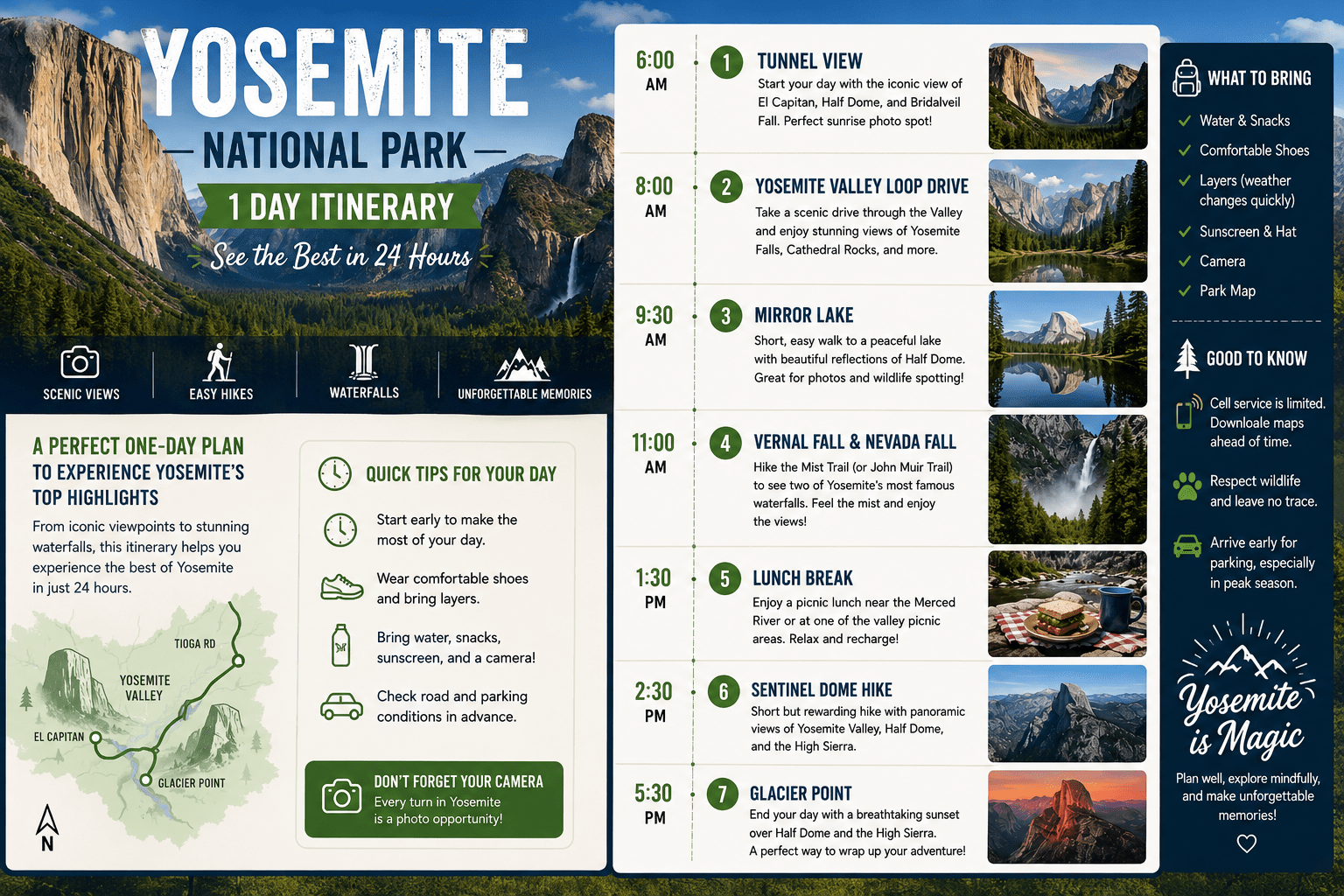
Yosemite National Park 1 Day Itinerary: See the Best in 24 Hours
A single day in Yosemite sounds impossible. It’s not — but it requires a real plan.
A Yosemite National Park 1 day itinerary is a structured, hour-by-hour schedule for visiting Yosemite Valley’s most iconic landmarks — El Capitan, Yosemite Falls, Half Dome viewpoints, and Bridalveil Fall — within a single visit. The goal is to minimize driving, sidestep peak-hour crowds, and hit every must-see stop before the light disappears.
According to the National Park Service’s 2023 Visitor Use Statistics, Yosemite received over 3.9 million recreational visitors that year. Most arrived in summer. Most were underprepared for how the timed entry system works. Many were stuck in traffic at 10 AM wondering why nobody told them to arrive at dawn.
This guide exists so that doesn’t happen to you.
Before You Go: The Permit Reality Nobody Talks About
Here’s the thing: the single biggest reason one-day Yosemite trips fall apart isn’t bad weather or tired legs. It’s showing up without a timed entry reservation and being turned away at the gate.
Between late April and late October, Yosemite requires a timed entry permit for all vehicles entering before 4 PM. You book these on Recreation.gov, typically two months in advance. Slots go live exactly 60 days before the entry date at 8 AM Pacific — and they sell out within minutes on release day.
I’ve seen conflicting data on this. Some sources say same-day cancellations free up slots regularly; others say you shouldn’t count on it. My read: check Recreation.gov the night before and the morning of your trip. Cancellations do appear, but betting your only day on one is a real gamble.
No permit? Arrive before 5 AM or after 4 PM. The valley at dusk has cleared most of its crowds and the light hits the granite walls sideways in a way that mid-afternoon never delivers.
What most guides skip: your America the Beautiful annual pass covers the entrance fee but does NOT replace the timed entry reservation. They’re two separate systems on two separate websites.
To book your timed entry permit, follow these steps:
- Create a free account on Recreation.gov before release day.
- Set a calendar alert for 60 days before your visit at 7:50 AM Pacific.
- Search “Yosemite Valley Timed Entry” and check out within 15 minutes — slots go fast.
- Screenshot your confirmation. Cell service inside the park is unreliable.
The Hour-by-Hour Yosemite 1 Day Itinerary
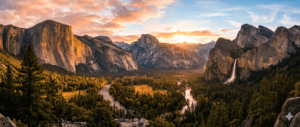
Start early. Dawn in Yosemite Valley isn’t just less crowded — it’s a genuinely different park. Golden light on El Capitan at 6:30 AM is one of those visuals that stays with you long after you’ve left.
5:30 – 6:30 AM: Tunnel View at Sunrise
Start here. Full stop.
Tunnel View sits at the eastern end of the Wawona Tunnel on Highway 41 and delivers the single most photographed panorama in the entire park — El Capitan to the left, Half Dome center-back, Bridalveil Fall dropping down the right wall. Parking at this hour is easy. By 9 AM it’s a gridlock mess with tour buses double-parked.
6:45 – 7:30 AM: Bridalveil Fall Trail
Drive five minutes west into the valley. The Bridalveil Fall trail is a 0.5-mile round trip on a paved path — genuinely accessible for all fitness levels, including families with young kids or anyone who doesn’t hike regularly.
In spring (April through early June), the fall roars and you’ll get soaked within 30 feet of the base. By August it slows to a thin mist. If you’re visiting mid-summer, it’s still scenic — just don’t expect the same drama. Or maybe I should say it this way: Bridalveil in May is a waterfall; Bridalveil in August is a trickle with a great backdrop.
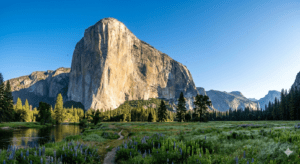
7:45 – 8:30 AM: El Capitan Meadow
Drive east on Northside Drive and pull over at El Capitan Meadow.
Then look up.
The 3,000-foot vertical granite face of El Capitan is one of those things no photograph fully prepares you for. Bring binoculars if you have them — on any given day there are climbers visible on the wall, tiny specks moving upward. Scanning for them takes ten minutes and you’ll almost always find at least one.
9:00 – 11:00 AM: Yosemite Falls Trail
Park at Yosemite Valley Lodge (Shuttle Stop 7) and walk to Lower Yosemite Falls — a 1.0-mile loop on a paved path with a viewing platform that puts you within misting distance of one of the tallest waterfalls in North America.
If your fitness allows it, push up the Upper Yosemite Falls trail toward Columbia Rock — roughly 2 miles round trip and steep, but the elevated perspective over the valley floor is worth the burn. The full trail to the top is 7.2 miles round trip, which is too much for a day that includes other stops. Go to Columbia Rock and turn around.
This is where most first-time visitors underestimate the clock. Budget two hours minimum for this stop — more if you want to sit and absorb it rather than just pass through.
11:30 AM – 1:00 PM: Valley Visitor Center & Lunch
The Yosemite Valley Visitor Center (Shuttle Stop 5) is free, air-conditioned, and genuinely informative. The geology exhibit alone reframes how you see everything you’ve been looking at all morning. Twenty minutes here makes the rest of the day richer — don’t skip it just because it feels like a detour.
Lunch: Yosemite Valley Lodge has a casual dining room that handles volume without brutal wait times. A better option is picking up food at the Village Store (Shuttle Stop 2) and eating at a picnic table near the Merced River. Quieter, cheaper, and far more memorable.
1:30 – 3:00 PM: Mirror Lake Loop (Seasonal)
Take the free Yosemite Valley Shuttle (Stop 17) to Mirror Lake. In spring, this shallow lake reflects Half Dome almost perfectly. By late summer, the lake bed dries up and the “lake” becomes a sandy meadow. Still a pleasant 5-mile loop through eastern valley forest either way — just different expectations depending on the month.
Some experts argue that skipping Mirror Lake on a one-day trip is the right move, saving the legs for Glacier Point. That’s valid if you’re photography-focused and driving. But the Mirror Lake loop offers something the viewpoints don’t: genuine quiet, forest canopy, and a stretch of trail where the crowds thin dramatically.
3:30 – 5:00 PM: Valley View & Merced River
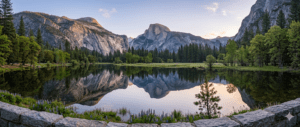
Head back west toward the park exit and stop at Valley View — a roadside pull-off on Northside Drive near the Merced River. You’re seeing the valley from the opposite angle to Tunnel View now, with El Capitan receding behind you and the river curving through willows and pines. Completely different mood from the morning.
On a warm day, take off your shoes and wade into the Merced at a sandy bank. The water runs snow-cold even in August — not swim temperature, but extraordinary on tired feet after ten hours of walking.
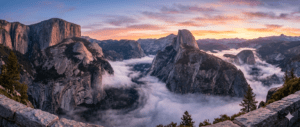
5:30 PM Onward: Glacier Point (Optional Add-On)
Glacier Point adds roughly two hours to your day — 1 hour drive each way from the valley floor, plus time at the overlook itself. The payoff is a bird’s-eye view of Half Dome and the entire valley from 7,214 feet that simply isn’t available anywhere else without a serious hike.
Glacier Point Road is typically closed from November through May or June, depending on snowpack. Check nps.gov/yose for current road status before committing.
Look — if you’re in a photography-first mindset and have the energy for it, here’s what actually works: do Glacier Point last, arrive an hour before sunset, and stay until the alpenglow fades on Half Dome. It’s the most technically spectacular view in the park. But if your legs are done and you have an early drive home, don’t force it. The valley floor has already delivered.
Quick Comparison: Choosing Your Stops
Valley Floor vs. Glacier Point: the valley floor is better suited for first-time visitors because it delivers physical proximity to granite, water, and wildlife that an overlook can’t replicate. Glacier Point works better when photography and panoramic views are the primary goal. The key difference is scale — the valley puts you inside the landscape; Glacier Point puts you above it.
| Stop | Best For | Key Benefit | Limitation |
|---|---|---|---|
| Tunnel View | First-timers, photographers | Best single valley panorama | Crowded by 8 AM |
| Bridalveil Fall | All fitness levels | Accessible, dramatic mist | Reduced flow Jul–Sep |
| Yosemite Falls Trail | Hikers, waterfall seekers | Tallest waterfall in N. America | Busy shuttle stop |
| Mirror Lake Loop | Quiet hikers, Half Dome views | Forest trail, reflection shots | Lake dries up Aug–Oct |
| Glacier Point | Panoramic views, photographers | 360° valley overview | Long drive, road closes Nov–May |
Getting Around: Use the Shuttle, Park Once
Most traffic frustration in Yosemite is self-inflicted. Park your car once and don’t move it until you leave.
The free Yosemite Valley Shuttle runs year-round on a continuous loop connecting all major valley stops — every 10 to 20 minutes in peak season. Every stop in this itinerary is reachable by shuttle once you’ve parked. Curry Village fills first on summer mornings. Yosemite Falls lot is your next option. After that, use Yosemite Valley Lodge and take the shuttle everywhere.
Download AllTrails before you leave home and save the Yosemite Valley map pack for offline use. Cell signal inside the park disappears regularly, and navigating on a downloaded map is far less stressful than hunting for bars on a cliff face.
Seasonal Guide: What Changes Month to Month
Most one-day Yosemite guides treat the park as a fixed experience. It isn’t — it’s four dramatically different parks depending on when you arrive.
Spring (April – June) Waterfalls at peak flow. Bridalveil, Yosemite Falls, and Nevada Fall all roar. Meadows green up and wildflowers bloom in late May. Glacier Point Road may remain closed into June depending on snowpack. Timed entry permits are most competitive — book at the 60-day mark without fail.
Summer (July – August) Peak crowds. Parking fills before 8 AM on weekends. Waterfalls slow by August; Mirror Lake dries out. Best weather for higher-elevation trails. Wildfire smoke is a real possibility — check AirNow.gov before heading out.
Fall (September – October) One of the best times to visit. Crowds drop sharply after Labor Day. Dogwood and maple begin turning gold by mid-October. Timed entry still required through late October.
Winter (November – March) No timed entry reservation required. Park entrance fee still applies. Yosemite Falls may partially freeze; the valley floor is accessible year-round. Glacier Point and Tioga roads closed.
What to Pack for One Day in Yosemite
Keep it practical. You’re not backpacking, but you are spending 10+ hours on your feet.
- Water: at least 2 liters per person. Refill stations at the Visitor Center and Valley Lodge.
- Food: pack a real lunch and snacks — valley dining lines run long and options are limited.
- Layers: valley temperature swings of 20°F between dawn and afternoon are completely normal.
- Sun protection: valley walls don’t shade you at midday. Sunscreen and a hat are non-negotiable by July.
- Sturdy shoes: the valley floor is largely paved, but wet rocks near waterfall bases are slippery.
- Offline maps: download AllTrails and the NPS Yosemite map pack before you lose signal at the gate.
Your Questions, Answered
Q: What’s the best time to arrive at Yosemite for a one-day trip?
A: Before 7 AM, ideally at sunrise. Parking fills by 9 AM on peak days, key viewpoints crowd quickly after, and the morning light on El Capitan is reason enough alone to set an early alarm.
Q: How do I get a timed entry permit for Yosemite?
A: Book on Recreation.gov exactly 60 days before your visit at 8 AM Pacific. Permits sell out in minutes. Check for cancellations the night before and morning of — they do appear occasionally.
Q: Should I hike on a one-day Yosemite trip?
A: Yes, but keep it manageable. Lower Yosemite Falls loop (1 mile), Bridalveil Fall trail (0.5 miles), and Mirror Lake loop (5 miles) are the best fits. Half Dome cables require 10+ hours and shouldn’t be part of a valley day trip.
Q: Why does Yosemite get so crowded — and when does it ease up?
A: According to NPS 2023 data, Yosemite drew over 3.9 million visitors that year, with summer weekends at the absolute peak. Crowds ease sharply after Labor Day in September. Weekday visits are noticeably quieter than weekends in any season.
Q: When should I skip Glacier Point on a one-day trip?
A: Skip it if the road is closed (November through May/June), if you’re already short on time after valley stops, or if fatigue has set in. It adds two hours minimum. Prioritize it on your second visit.