
Ho Chi Minh City to Hoi An Vietnam: Every Way to Get There (2026 Guide)
Flight, overnight train, sleeper bus, or the Da Nang fly-then-bus combo — here’s exactly what each option costs, how long it really takes, and when each one makes sense.
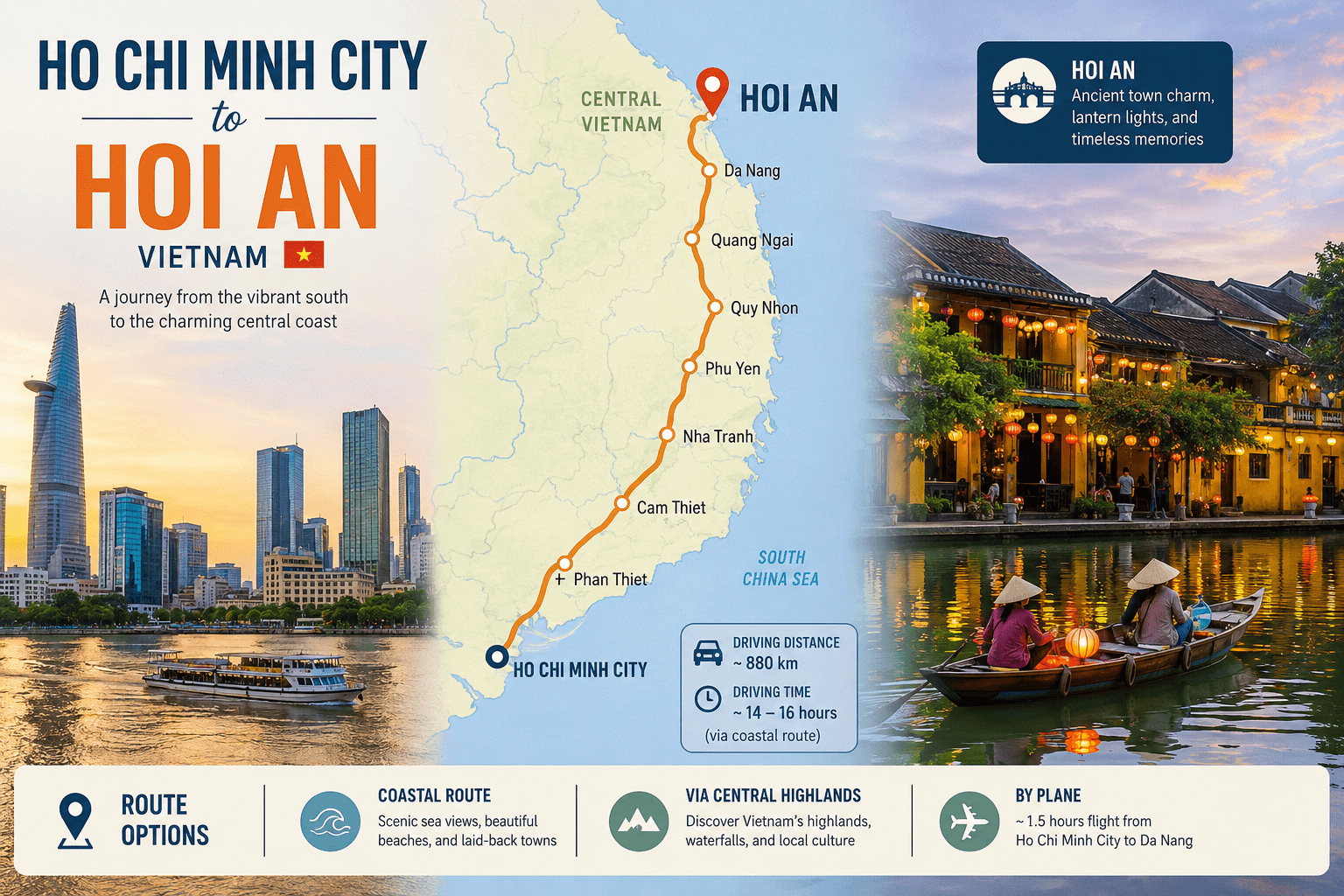
Route at a glance: ~850 km · Fastest route: ~3 hrs · Cheapest option: $15–25 USD · Train/bus journey: 17–20 hrs · Da Nang to Hoi An final leg: 30 km
Vietnam saw 17.5 million international arrivals in 2024, up 39.5% year-on-year according to Vietnam’s General Statistics Office — and the HCMC-to-Hoi An corridor is one of the country’s most-traveled tourist routes. That popularity means plenty of options, but it also means the “obvious” choice isn’t always the right one for your situation.
This guide breaks down every realistic way to make the trip. No padding. Just what each option actually costs, what it feels like, and who it suits.
Quick Answer
Traveling from Ho Chi Minh City to Hoi An Vietnam means choosing between flying to Da Nang (fastest, ~3 hrs total), taking the overnight Reunification Express train (scenic, ~18–20 hrs), riding a sleeper bus (cheapest, ~17–20 hrs), or booking a private transfer. Because Hoi An has no airport or train station, every route passes through Da Nang for the final leg.
Why there’s no direct train or bus straight to Hoi An
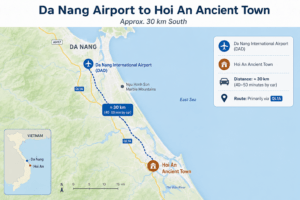
The key thing to understand about this route: Hoi An has neither a train station nor an airport. The nearest transport hub is Da Nang — about 30 km away. So regardless of how you travel from Ho Chi Minh City, you’ll arrive in Da Nang first and complete the final stretch by taxi, Grab, or shuttle bus.
That’s not a problem. It’s just a planning reality. The Da Nang-to-Hoi An leg takes 40–60 minutes and costs very little. What matters more is the 850 km between Saigon and Da Nang — that’s where your decision actually lies.
The route runs northeast along Vietnam’s coast, passing through Nha Trang, Quy Nhon, and the dramatic Hai Van Pass. By land, it’s genuinely beautiful. By air, you’ll miss all of it — but you’ll be poolside in Hoi An three hours after leaving your hotel.
Option 1: Flight to Da Nang + transfer (fastest route)
Total time: ~3 hours | Flight: 1 hr 20 min | Flight cost: $25–100 USD | Da Nang transfer: $8–30 USD | Departs: Tan Son Nhat (SGN) | Arrives: Da Nang Airport (DAD)
Pros: Door-to-door in ~3 hours · multiple daily departures · budget fares available on weekdays · saves a full day of travel
Cons: Prices spike March–August · extra transfer step from Da Nang · airport check-in adds ~1.5 hours · no scenery
Four airlines serve the Ho Chi Minh City–Da Nang route daily: VietJet Air, Vietnam Airlines, Bamboo Airways, and Vietravel Airlines. VietJet typically offers the lowest base fares — sometimes as low as $25–30 USD if you book 3–4 weeks out and fly mid-week. Vietnam Airlines costs more but includes checked luggage and tends to run on time.
One thing worth knowing: sit on the left side of the plane when flying north to Da Nang. On a clear day you’ll catch coastal views approaching the city that give you a feel for the terrain below.
Insider tip: Search 12Go Asia or Skyscanner and compare the flight-plus-Grab combo against train fares before assuming the plane is more expensive. During shoulder season (Sep–Nov, Jan–Feb), a VietJet fare plus a Grab to Hoi An can come in at $35–45 total — not much more than a soft-sleeper train ticket.
From Da Nang Airport to Hoi An, a Grab car runs about 200,000–280,000 VND ($8–11 USD) and takes 40–50 minutes. Shared shuttles exist for around 100,000 VND but take longer due to hotel drop-off stops. Most travelers booking on 12Go Asia can bundle the flight and transfer as a combined booking.
Option 2: Overnight train to Da Nang (most scenic)
Duration: 17–20 hrs | 4-berth soft sleeper: $35–55 USD | Hard seat: ~$25 USD | Departs: Saigon Station | Arrives: Da Nang Station | Book via: VR website or 12Go Asia
Pros: Stunning coastal scenery · overnight saves accommodation cost · more space than a plane seat · power sockets in sleeper cabins
Cons: 17–20 hours is genuinely long · bottom bunks become shared seating during the day · can run 30–60 min late · still need a Da Nang transfer at the end
Which train and which class to book
Vietnam Railways runs several SE-numbered trains on this corridor. The SE1 and SE3 (evening departures) are the most popular for overnight travel — they leave Saigon around 7–9 pm and pull into Da Nang around midday the next day. That timing works well: sleep through the night, wake somewhere around Nha Trang, then enjoy the Hai Van Pass approach in morning light.
Cabin classes from cheapest to most comfortable:
- Hard seat (2nd class seated) — about $25 USD. Upright for 17+ hours. Fine for short day trips; brutal overnight.
- 6-berth soft sleeper — around $30–45 USD. Reasonable. More crowded, thinner mattresses.
- 4-berth soft sleeper — about $35–55 USD. This is the one worth paying for. A lockable compartment door, slightly better bedding, power sockets near every bunk, and a small fold-out table. The price difference over the 6-berth is small enough that most travelers don’t regret upgrading.
Look — if you’re on a tight budget and genuinely don’t mind a rough night, the hard seat works. But the 4-berth soft sleeper is worth every extra dollar for a 17-hour journey.
Train vs. flight: The flight is better suited for travelers with limited time — total door-to-door is roughly 3 hours versus 18–20. The train works better when you want scenery, want to save a hotel night, or face inflated peak-season flight prices. The key difference is time: one option saves 15+ hours.
Heads-up: People in the bottom bunk on Vietnamese trains often find other passengers treating their bunk as a shared seat during the day. It’s not unusual — it’s just how the trains work. Book a night departure to minimize this.
Book directly through the Vietnam Railways (VR) website (dsvn.vn) or via 12Go Asia (adds a small $1–3 service fee but has a much better English interface). Book at least 2–3 weeks out during high season — soft sleeper berths on popular SE trains sell out fast.

Option 3: Sleeper bus (cheapest way to go)
Duration: 17–20 hrs | Cost: $15–27 USD | Departs: Mien Dong Station | Nha Trang stop: ~30 min break | Top operators: Futa Bus, Hanh Café | Pillow/blanket: Included
Pros: Cheapest option available · some buses drop directly at hotels · AC, pillow, blanket standard · overnight saves a hotel night
Cons: No onboard toilet · can run 1–2 hours late · top bunks are rougher in transit · it’s still a very long haul
Futa Bus (Phuong Trang) and Hanh Café are the two most recommended operators on this route. Both run modern sleeper coaches with three rows of pod-style recliners — think airplane business-class seats that fold into near-flat positions, with a small shoe cubby and luggage stowed underneath.
The journey typically departs around 7–8 pm from Mien Dong Station (292 Dinh Bo Linh, District Binh Thanh) and makes a 30-minute rest stop in Nha Trang before pushing on through the night. Most buses arrive in Hoi An or Da Nang by midday. Fares sit between $15–27 USD depending on the operator and how far in advance you book.
Pro tip: Always request a bottom bunk. Upper bunks get noticeably rockier on mountain sections, and if the driver brakes hard, you’ll feel it more up top. It’s a small detail that makes a big difference over 17+ hours. Also: no toilets on board, so go before you board and use the Nha Trang stop.
I’ve seen conflicting reports on whether some buses drop passengers directly at Hoi An hotels — some operators advertise this, others drop you at a fixed depot on the edge of town. My read: confirm the drop-off point when booking, especially if you’re arriving late.
Or maybe I should say it this way: for pure cost, nothing beats the sleeper bus. But it’s a long night and it’s not for everyone. If comfort matters, the 4-berth train sleeper wins.
Option 4: Private car transfer
A private car with a driver from Ho Chi Minh City to Hoi An covers the ~950 km road distance in roughly 12–14 hours. Prices typically range from $120–250 USD depending on car type and company.
Most travelers who want a private transfer opt for the fly-to-Da Nang + private car from Da Nang to Hoi An combo rather than a full Saigon-to-Hoi-An private drive. It’s significantly cheaper and achieves the same comfort outcome. A private car from Da Nang Airport to Hoi An runs around $20–35 USD.
Full Saigon-to-Hoi-An private transfers make most sense for families with young children or travelers carrying excessive luggage. For solo travelers or pairs, the fly-and-Grab combo delivers the same door-to-door experience for a fraction of the price.
Quick comparison: all transport options at a glance
What most guides skip here is a genuinely useful side-by-side — not just price and time, but who each option actually suits.
| Option | Total Time | Cost (USD) | Best For | Key Limitation |
|---|---|---|---|---|
| Flight + Da Nang transfer | ~3 hrs | $33–130 | Time-short travelers, families | Prices spike peak season |
| Overnight train (4-berth sleeper) | 18–20 hrs | $43–65 | Scenery lovers, saving a hotel night | Long journey, can run late |
| Sleeper bus | 17–20 hrs | $15–27 | Budget backpackers | No toilet; top bunk is rough |
| Private car (full route) | 12–14 hrs | $120–250 | Families, large groups | High cost for solo travelers |
The Da Nang fly-then-bus combo doesn’t appear on many comparison charts — and that’s the gap most guides miss. Fly to Da Nang, then take a $8–11 Grab directly to your Hoi An hotel. Total cost: $33–45 on a budget flight. Total time: under 3.5 hours. It genuinely competes with the sleeper bus for cost during off-peak season, and beats it on every other metric.
Getting from Da Nang to Hoi An: your options
Whether you fly or take the train, you’ll arrive in Da Nang and need to cover the final 30 km to Hoi An. Here’s what that looks like:
- Grab car — the best option. Book through the app, fare is ~200,000–280,000 VND ($8–11 USD), 40–50 minutes. No haggling, transparent pricing.
- Metered taxi — about the same cost as Grab if you use a reputable company (Mai Linh or Vinasun). Avoid unofficial taxis at the airport exit.
- Shuttle bus — around 100,000 VND ($4), runs from Da Nang Airport and the train station to various Hoi An hotels. Slower due to multiple drop-off stops, but fine if cost is the priority.
- Public bus (line 1) — about 25,000 VND. Takes 60–90 minutes, doesn’t reach the ancient town center, but works if you’re cutting every possible cost.

Where to book and when to book it
For flights
Use Skyscanner to compare airlines, then book directly on VietJet or Vietnam Airlines for the best fares. Midweek flights (Tuesday, Wednesday) are typically cheaper than weekend departures. Book 3–4 weeks out for normal travel periods; 6–8 weeks ahead for Tết (Vietnamese New Year) or summer peak season (June–August).
For trains
The Vietnam Railways website (dsvn.vn) books directly but the English interface can be frustrating. 12Go Asia adds a small $1–3 service fee but is worth it for usability and English customer support. Book soft sleeper berths as early as possible — particularly SE1 and SE3 Friday and Saturday departures, which fill quickly.
For buses
Book directly on Futa Bus’s website or through 12Go. Hanh Café is bookable through most hostel front desks in the Pham Ngu Lao backpacker district. Don’t book through random street-front travel agents who upsell to their own branded buses — stick to established operators.
Booking lead time: For peak dates (Tết, national holidays, summer school break June–August), book train berths and bus seats at least 3–4 weeks in advance. For flights, 6–8 weeks is safer. Off-peak, a week out is usually fine — but the cheapest flight fares disappear fast.
Combining your booking
Some travelers find it convenient to bundle their flight and Da Nang-to-Hoi An transfer through 12Go Asia, which allows both legs in one transaction. It’s not always the cheapest option, but it saves time and provides one point of contact if something goes wrong.
Questions people actually ask
Q: What’s the fastest way to get from Ho Chi Minh City to Hoi An? A: Fly to Da Nang with VietJet, Vietnam Airlines, or Bamboo Airways (1 hr 20 min), then take a Grab car to Hoi An (~45 min). Door-to-door time is roughly 3 hours including airport check-in.
Q: How long does the sleeper bus from Ho Chi Minh City to Hoi An take? A: 17–20 hours on average, with a short stop in Nha Trang. Most overnight buses depart around 7–8 pm and arrive the following late morning or midday.
Q: Should I take the train or fly from Ho Chi Minh City to Hoi An? A: Fly if you have limited time or a tight schedule. Take the train if you want scenery and don’t mind 18–20 hours — the Hai Van Pass stretch alone is worth it for slow travelers. The 4-berth soft sleeper class makes the journey genuinely comfortable.
Q: Which bus company is best for the Ho Chi Minh City to Hoi An route? A: Futa Bus (Phuong Trang) and Hanh Café are consistently rated the best for reliability, coach quality, and punctuality.
Q: When is the best time to travel from Ho Chi Minh City to Hoi An? A: February to April is ideal — dry weather, mild temperatures, fewer crowds than peak summer. Avoid October and November specifically for Hoi An, when Central Vietnam’s rainy season can cause serious flooding.
Q: Is a private car worth it for the whole journey? A: Rarely, unless you’re a group of 4+ with a lot of luggage. The fly-to-Da Nang-and-Grab combo delivers similar convenience at a fraction of the cost.
Q: What train class should I book for the Ho Chi Minh City to Da Nang overnight train? A: The 4-berth soft sleeper on the SE trains. It costs a bit more than the 6-berth option but has a lockable door, better mattresses, and power sockets. Worth it for a 17+ hour journey.
Q: How much does a Grab from Da Nang Airport to Hoi An cost? A: Around 200,000–280,000 VND ($8–11 USD) for a standard car. The trip takes 40–50 minutes. Book through the Grab app for transparent, fixed pricing.
Q: Do sleeper buses have toilets? A: No. Vietnamese sleeper buses have no onboard toilets. There’s typically one scheduled rest stop around Nha Trang at the halfway point. Plan accordingly.
Q: Can I break the journey with a stop in Nha Trang? A: Yes — and it’s worth considering. Nha Trang sits roughly halfway and is a popular beach town in its own right. Stop for a night, then continue to Hoi An. Both the Reunification Express and open-ticket bus passes allow for mid-route stops.
The bottom line
- Short on time? Fly to Da Nang, grab a Grab. Done in 3 hours.
- On a tight budget? Futa Bus or Hanh Café sleeper bus — $15–25 USD, gets you there overnight.
- Want scenery without suffering? Book a 4-berth soft sleeper on the SE1 or SE3. You’ll remember the Hai Van Pass.
- Group with luggage? Private car from Da Nang Airport, or fly and book a hotel taxi for the transfer.
- In every case: book in advance for peak season, use 12Go Asia or official sites, and don’t overlook the Da Nang-to-Hoi An final leg — it’s easy but requires a plan.