
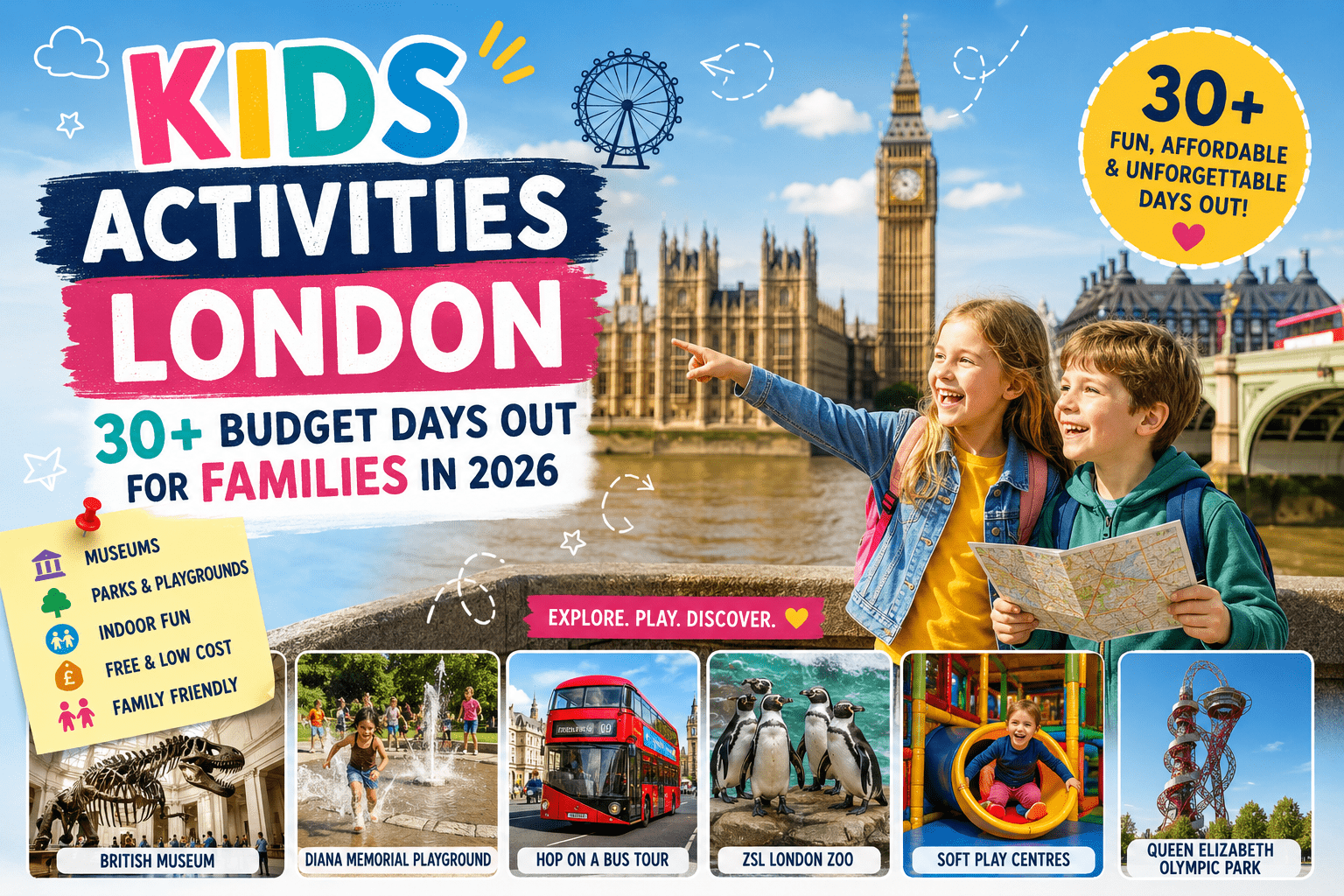
Kids Activities London: 30+ Budget Days Out for Families in 2026
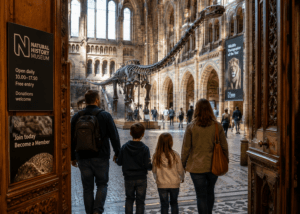
Kids activities in London means the free museums, parks, city farms, and low-cost events across the capital that keep children entertained without draining a family’s budget. Most of the big-name museums — the Natural History Museum, Science Museum, and Tate Modern among them — charge nothing for general admission. That single fact changes how a family day in London should be planned.
Here’s the thing: most “things to do” lists just repeat the same five museums in a different order. This one is sorted by age, weather, and actual cost — including the paid extras that free museums quietly tuck inside.
Free Museums and Galleries Worth the Trip
London’s museum scene is unusually generous. According to Visit London’s 2026 family guide, London was ranked the second-best city in the world for 2026 by Tripadvisor, and its free cultural offering is a big part of that reputation. The Natural History Museum remains the obvious pick for dinosaur-obsessed kids, with a new bronze Diplodocus sculpture in its gardens. The Science Museum is free to enter, but its Power Up zone — a retro gaming and VR area — carries a separate ticket, so budget for that if your kids are gamers.
The Horniman Museum in Forest Hill is quieter and often overlooked. It’s free, it has gardens open from 7:15am, and it runs a free Octonauts Adventure trail through November 2026. The V&A’s children’s branch, Young V&A, is also completely free and built specifically for younger visitors.
To [achieve a free museum day out], follow these steps:
- Book a free timed entry slot online where offered.
- Arrive at opening time to beat school-holiday queues.
- Check the museum’s events page for free drop-in activities that day.
One quick caveat: some “free” museums require advance booking during peak school holidays, and slots do fill up. What most guides skip is that walk-up entry on a Saturday afternoon in half-term can mean a genuine wait outside.
Parks, Farms, and Free Outdoor Play
Not every good day out is indoors. London’s Royal Parks and city farms cost nothing and work well for younger kids who need to run, not queue. Richmond Park has deer roaming freely. Camley Street Natural Park near King’s Cross is a genuine urban wetland, tiny but overlooked. Vauxhall City Farm is free to visit and hosts seasonal events like sheep shearing days.
Brockwell Park in south London deserves a specific mention. It has a playground, a splash area, and — on Sundays between March and October — a miniature railway where a return ticket still costs £1. It’s a small detail, but it’s the kind of thing that turns a normal park visit into an actual outing.
Kensington Gardens’ Diana Memorial Playground, with its pirate ship and Peter Pan statue, is one of the most popular free playgrounds in the city. It gets busy. Go early if you can.
Rainy Day Options That Aren’t Another Museum
London rain is not optional, so a backup plan matters. The Postal Museum’s underground mail train ride is paid but genuinely different from the usual museum offer. The British Library, free to enter, runs family-friendly exhibitions — its current Fairy Tales exhibition runs until 23 August 2026. Waterstones Piccadilly has a large children’s section that works surprisingly well as a free, dry hour.
Some experts argue that West End matinees are too expensive for a casual family outing. That’s fair for a spontaneous rainy afternoon. But for a planned birthday or school-holiday treat, a matinee of a family show can be cheaper than people expect, and it solves the weather problem completely.
Quick Comparison: Museums vs Parks vs Indoor Play Zones Free museums are better suited for families with kids aged 6 and up who can handle structured exhibits, because the content rewards attention span. City farms and parks work better when younger children need unstructured movement — the key difference is stimulation versus space.
Half-Term and School Holiday Events
Half-term is when London’s cultural venues put in real effort. During February half-term, the Southbank Centre runs its Imagine festival, with free craft days and comedy shows for kids. During May half-term, the Natural History Museum has run themed drop-in sessions like Jurassic Jaws and Ocean Tales, both free. These change year to year, so it’s worth checking the specific dates before setting out.
Anyway — one practical tip that rarely makes these lists: children under 11 travel free on London buses and the Tube when accompanied by a paying adult. On a day where you’re moving between three venues, that adds up.
Quick Comparison Table
| Option | Best For | Key Benefit | Limitation |
|---|---|---|---|
| Natural History Museum | Ages 4–12, dinosaur fans | Free entry, huge scale | Can be very crowded in holidays |
| Horniman Museum | Families wanting fewer crowds | Free, gardens open early | Nature Gallery closed until 2027 |
| Brockwell Park | Toddlers to age 8 | £1 mini-railway, splash pad | Railway only runs Sundays (Mar–Oct) |
| Vauxhall City Farm | Under-6s | Completely free | Small, not a full-day outing |
| Southbank Centre events | School holiday weeks | Free festivals and workshops | Programme changes seasonally |
Voice Search Q&A
Q: What’s the best free thing to do with kids in London?
A: The Natural History Museum is the most reliable free option — free entry, huge scale, and consistently rated top by families and reviewers.
Q: How do I avoid queues at London’s free museums?
A: Book a free timed slot online and arrive at opening. Weekday mornings outside school holidays are quietest.
Q: Should I pay for London Zoo or stick to free options?
A: If your child is animal-obsessed, London Zoo is worth it. For a budget day, city farms like Vauxhall cover similar ground for free.
Q: When should I book half-term activities in London?
A: Two to three weeks ahead for anything ticketed. Free drop-in sessions rarely need booking but do get crowded.
Q: Why does the Science Museum charge for some areas if entry is free?
A: General galleries are free, but specialist zones like Power Up (retro gaming and VR) run as a paid add-on to fund the equipment and staffing.