
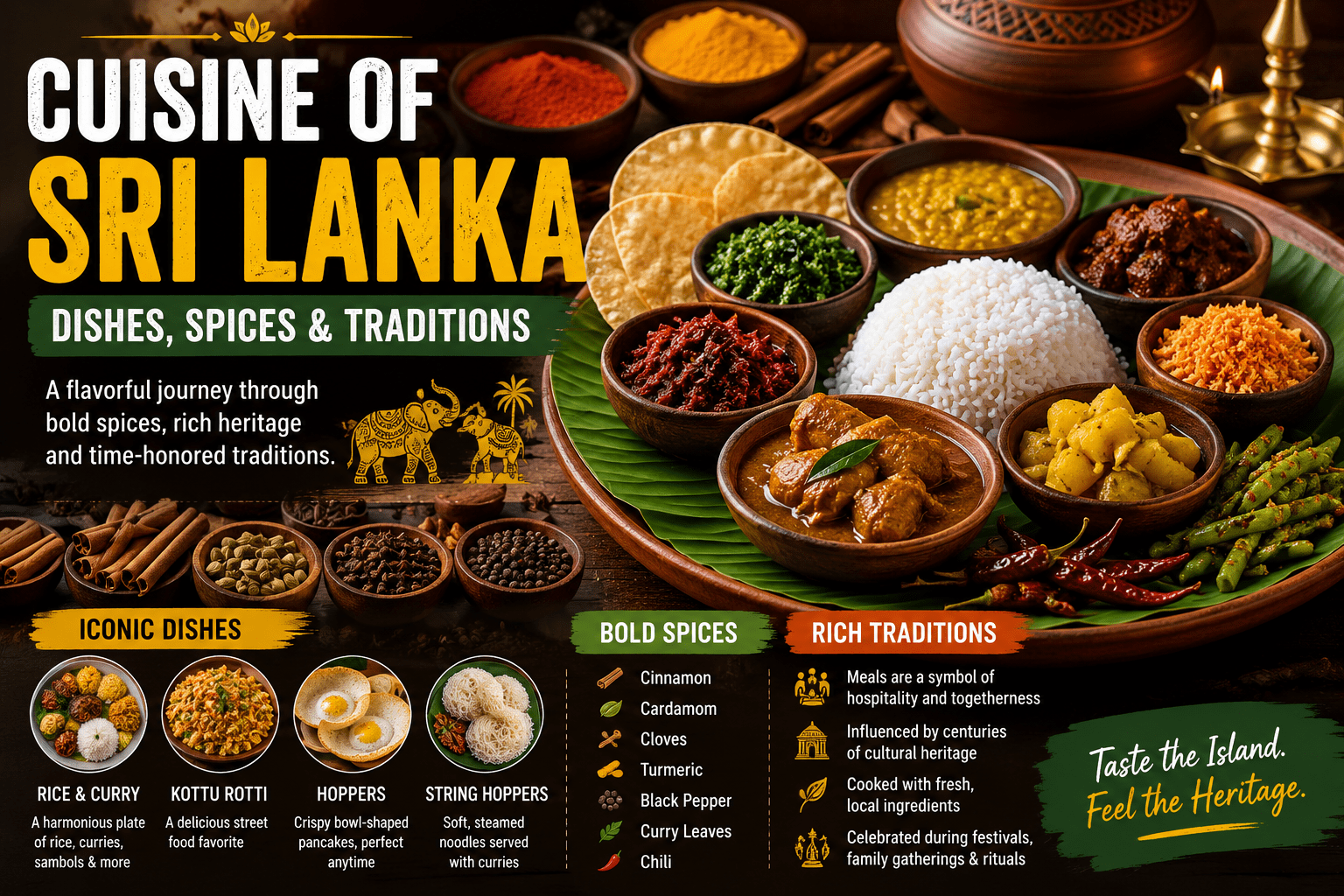
Cuisine of Sri Lanka: Dishes, Spices & Traditions
Cuisine of Sri Lanka refers to the island nation’s rice-and-curry-based food culture, shaped by Sinhalese, Tamil, Muslim/Moor, and Dutch Burgher traditions. It’s built around coconut, chili, and a distinct spice blend called unroasted or roasted curry powder, depending on the dish. No single “national dish” defines it — the food changes by region and by who’s cooking.
Most guides stop there. They list hoppers, kottu roti, and watalappam, then move on. That misses the point. The dish tells you almost nothing about the cuisine on its own — the why behind it does.
What Makes Sri Lankan Cuisine Different From Indian Curry
People searching this topic usually arrive with one assumption: that Sri Lankan food is just a variant of South Indian cooking. It’s related, but not the same thing. According to research from SLIIT Business School published in 2023, tourists consistently describe Sri Lankan food as flavorsome and diverse, distinct enough from neighboring cuisines to register as its own culinary identity rather than a regional offshoot.
The difference comes down to three things: coconut in nearly every dish (milk, oil, or scraped fresh), a heavier reliance on Maldive fish — dried, flaked tuna — as a savory base, and a colder, more layered chili character rather than a straight-heat profile. Cinnamon, by the way, is native to Sri Lanka. Most of the world’s “Ceylon cinnamon” still comes from here, and it shows up in curries where Indian recipes might use a different warming spice.
Most people assume rice and curry is one dish. It’s actually a format — a base of rice surrounded by four to eight small curries, sambols, and pickles, each contributing one flavor note to the plate.
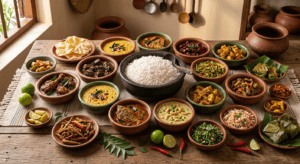
The Regional Divide: Sinhalese, Tamil, Muslim, and Burgher Cooking
Here’s the thing: asking “what is Sri Lankan food” is a bit like asking “what is American food.” The answer depends entirely on which part of the island you mean.
Kandyan Sinhalese cooking, from the hill country, leans on vegetables, jackfruit, and mild coconut gravies. Jaffna’s Tamil cuisine, in the north, is sharper and hotter, built around crab, prawns, and a spice mix that includes far more black pepper and dried chili than the south uses. Muslim or Moor cooking contributed biryanis, watalappam, and dishes with Malay and Arab trading influence. Dutch Burgher cooking gave the island lamprais — rice and accompaniments baked in a banana leaf parcel, a dish you won’t find anywhere else in South Asia.
Sri Lanka’s tourism sector grew sharply in the past two years, with 2024 arrivals reaching roughly 2.1 million visitors, a 38% jump from 2023, and food was repeatedly cited as a core draw for that recovery. That growth has pushed more regional dishes — Jaffna crab curry in particular — onto menus outside their home provinces, which is part of why “Sri Lankan cuisine” now reads as more varied online than it did a decade ago.
Quick Comparison
| Regional Style | Best For | Key Benefit | Limitation |
|---|---|---|---|
| Kandyan Sinhalese | Vegetarian travelers | Mild, coconut-forward curries | Less spice variety |
| Jaffna Tamil | Seafood and heat lovers | Bold, pepper-heavy crab curry | Hard to find outside the north |
| Muslim/Moor | Special-occasion meals | Biryani, watalappam, layered spice | Richer, less everyday food |
| Dutch Burgher | Trying something unusual | Lamprais — unique baked-leaf format | Rare outside Colombo |
Sinhalese cooking vs. Jaffna Tamil cooking: Sinhalese curries are better suited for mild, coconut-forward meals because they favor vegetables and gentle spicing. Jaffna cooking works better when you want intense heat and seafood — the key difference is pepper and dried chili concentration, not just ingredient choice.
Dishes You’ll Actually Encounter
A few dishes show up regardless of region, and knowing what they are before you order saves you a confused first bite.
- Kottu roti — chopped flatbread stir-fried with egg, vegetables, and meat or seafood, cooked loudly on a flat griddle with two metal blades
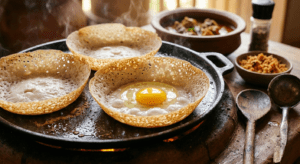
- Hoppers (appa) — bowl-shaped fermented rice-and-coconut pancakes, often with an egg cracked into the center
- String hoppers (idiyappam) — steamed rice noodle nests, usually eaten with a thin coconut curry
- Lamprais — rice, meat curry, and accompaniments baked together in a banana leaf, a Dutch-era dish
- Watalappam — a steamed coconut-jaggery custard flavored with cardamom, closer to flan than pudding
How to build an authentic Sri Lankan rice-and-curry plate:
- Start with steamed rice as the base
- Add one protein curry — fish, chicken, or lentils (dhal)
- Add two vegetable curries with different textures
- Add a sambol for heat and acidity
- Add a pickle or mallung (shredded greens) to finish
Short eats deserve a mention too — cutlets, patties, and fish buns sold at bakeries and roadside stalls, meant for grabbing on the move rather than sitting down to eat.
Spices, Sambols, and the Coconut Factor
Coconut isn’t a garnish here — it’s structural. Milk goes into curry gravies, scraped flesh goes into sambols, and the oil sometimes replaces vegetable oil entirely in coastal cooking.
Pol sambol — grated coconut, chili, lime, and dried Maldive fish, pounded together — sits on nearly every table. Seeni sambol, a sweet caramelized onion relish, plays the opposite role: sugar and slow-cooked onion instead of raw heat. Curry powder itself splits into two camps — raw curry powder for vegetable dishes, and roasted curry powder, darker and smokier, for meat and fish.
What most guides skip is how the spice is prepared, not just which spices are used. Roasting curry powder in a dry pan before grinding changes the entire flavor of a dish — it’s the difference between a curry tasting flat and tasting like something a Sri Lankan grandmother actually made.
I’ve seen conflicting claims online about whether Sri Lankan food is “spicier” than Indian food overall. Some sources say yes, flatly. Others say it depends on region. My read: it’s not hotter across the board, but the heat is layered differently — Sri Lankan dishes tend to build slowly through multiple small curries rather than hitting hard in one bite.
Why Sri Lanka Is Getting More Culinary Attention
Condé Nast Traveler ranked Sri Lanka the seventh-best food destination in the world in 2025, crediting the cuisine’s grounding in home-cooking traditions and closely guarded family recipes passed down through generations. That’s a meaningful shift — food tourism here used to be an afterthought behind beaches and wildlife safaris.
Ceylon tea plays into that reputation too. The industry carries a documented 150-year tradition of hand-picked production, and it remains one of the most recognized food exports tied to the island’s identity. Some tourism boards market the beaches first and the food second. That’s valid for a first-time visitor chasing sun. But if you’re planning a trip specifically around eating, food should probably lead the itinerary, not follow it.
This guide covers dishes, regional variation, and core spice logic. It does not cover restaurant recommendations or up-to-date pricing, since those change too fast for a static article to stay accurate.
Frequently Asked Questions
Q: What’s the most iconic dish in Sri Lankan cuisine?
A: Rice and curry is the closest thing to a national dish — a rice base surrounded by multiple small curries and sambols.
Q: How do I know if a curry is Sinhalese or Tamil style?
A: Tamil/Jaffna curries run hotter and heavier on black pepper; Sinhalese curries lean milder and more coconut-forward.
Q: Should I try kottu roti on my first day in Sri Lanka?
A: Yes — it’s widely available, filling, and a good entry point before trying spicier regional dishes.
Q: Why does Sri Lankan food use so much coconut?
A: Coconut is a native, year-round crop, so it became the base for milk, oil, and sambols across nearly every region.
Q: When should I try Jaffna crab curry specifically?
A: Best eaten in or near Jaffna itself, where the crab is freshest and the spice blend is made to the traditional recipe.