
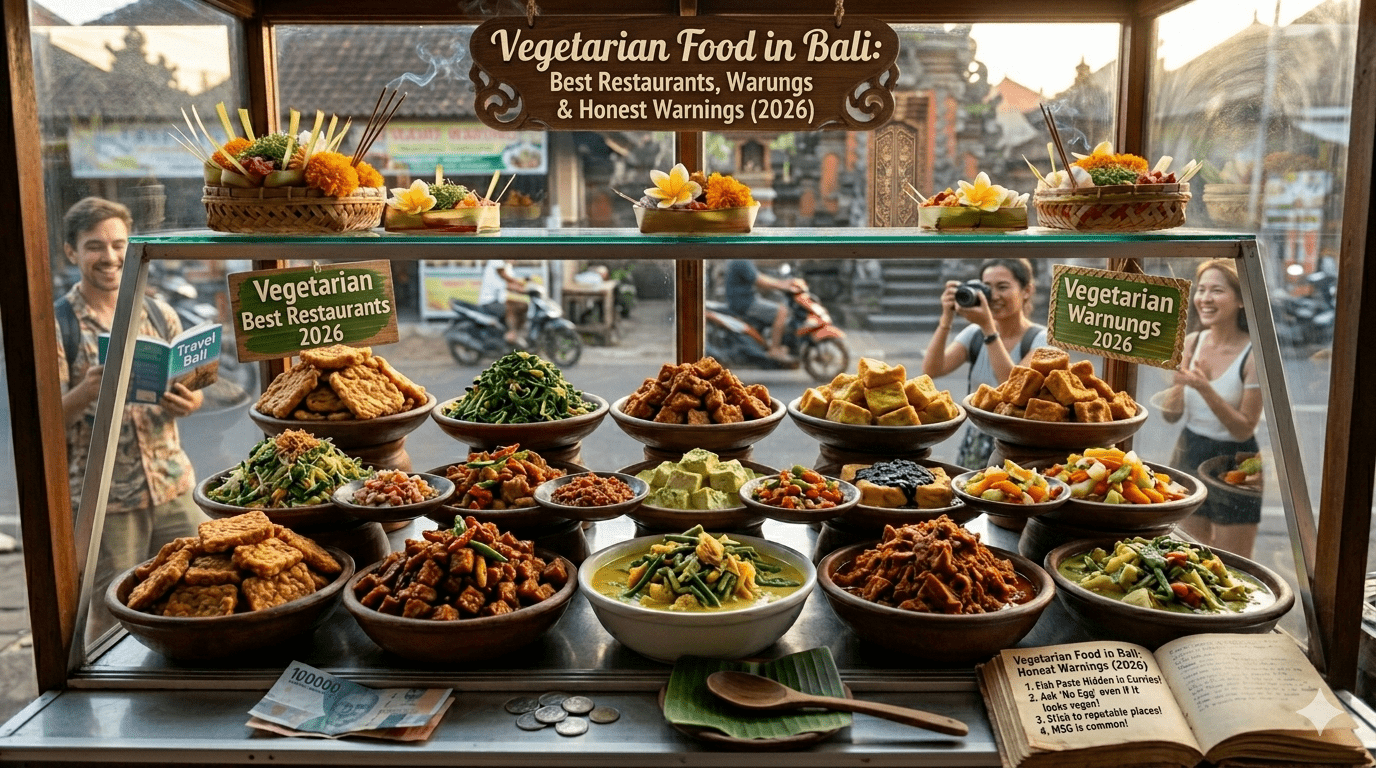
Eating Vegetarian in Bali: The Real Guide Nobody Else Bothers to Write
Bali has a reputation as a vegetarian paradise. Mostly, that reputation is earned. But there’s a gap between what travel blogs say and what actually ends up on your plate — and that gap is called terasi.
Terasi is shrimp paste. It goes into sambal. It goes into fried rice. It goes into dishes that get served to you with a smile at a warung where nobody told you it was there. Most guides skip this entirely. We won’t.
What “Vegetarian Food in Bali” Actually Means
Vegetarian food in Bali refers to the wide range of plant-based dishes — from traditional Balinese temple offerings to modern smoothie bowls — available across the island, many of which are naturally meat-free due to Bali’s Hindu culture. One clarifying note: “naturally vegetarian” in the Balinese context sometimes still includes fermented fish pastes or shrimp-based condiments, so knowing what to ask is as important as knowing where to go.
Bali is predominantly Hindu in a Muslim-majority Indonesia, which is why pork appears on many menus and why vegetables hold genuine cultural weight in local cooking. Temple offerings (canang sari) are entirely plant-based. That religious framework makes Bali genuinely different from the rest of Indonesia for vegetarian travelers.
Here’s the thing: the island has changed dramatically in the last decade. According to a 2023 Foodservice and Hospitality Asia report, plant-based menu options across Bali’s restaurant scene grew by over 40% between 2019 and 2023. The yoga-and-wellness tourism boom accelerated that. Ubud alone now has more vegetarian-dedicated restaurants per square kilometer than most European cities.
That said — traditional warungs (small local eateries) operate on different rules. And that’s where most travelers get tripped up.
The Hidden Ingredients Warning Every Vegetarian Needs to Read First
This is what most guides miss. Full stop.
Balinese cooking relies on a spice paste called base genep. It’s the foundation of almost every savory dish and it’s entirely veg-friendly. The problem isn’t base genep. The problem is what gets added on top.
Terasi (shrimp paste) — Goes into most traditional sambals. Incredibly common, rarely disclosed. If you order nasi campur at a warung and ask for “no meat,” the sambal on the side still likely contains terasi.
Pindang (fermented fish) — Used in some broths, particularly in Balinese soup bases. You won’t taste it as “fishy” — it just tastes like depth and umami.
Ebi (dried shrimp) — Scattered into some fried rice dishes and vegetable stir-fries as a flavor booster.
Look — if you’re eating exclusively at tourist-facing restaurants in Ubud or Canggu, you’ll rarely encounter this. Staff are trained, menus are specific, and the clientele skews heavily veg and vegan. But the moment you step into a roadside warung — which you absolutely should, because the food is extraordinary — the rules change.
Here are the Bahasa Indonesia phrases that will actually protect you:
- “Saya vegetarian” — I am vegetarian
- “Tanpa daging, ayam, ikan, dan seafood” — Without meat, chicken, fish, and seafood
- “Ada terasi?” — Does this contain shrimp paste?
- “Tanpa terasi, ya?” — Without shrimp paste, please?
Print these. Screenshot them. You’ll use them more than your Google Maps.

Where to Eat: Area-by-Area Breakdown
Ubud — The Vegetarian Capital of Bali
Ubud is where you go when you want options, calm, and food that takes vegetables seriously.
Sayuri Healing Food is a raw and living foods restaurant that attracts both serious wellness travelers and curious first-timers. The daily bowl is genuinely filling — which is more than you can say for most raw food spots that leave you hungry in an hour. Prices range from IDR 70,000–130,000 per dish (roughly USD 4–8).
Warung Biah Biah is the local answer to overpriced wellness menus. A family-run spot on Jalan Gautama, they do nasi campur with tofu and tempeh that is — without exaggeration — some of the best food in Ubud. Main plates run IDR 30,000–50,000. Tell them “tanpa terasi” and they’ll understand immediately.
Kafe Exiles sits in a bamboo building with an open kitchen and a menu that changes based on what’s at the market. They’re transparent about ingredients in a way that’s rare for a mid-range restaurant.
Quick note: Ubud’s Jalan Dewi Sita is your backup plan. Three restaurants side by side, all veg-forward, all with English menus. Not the most authentic experience but zero guesswork.
Canggu — Smoothie Bowls and Actually Good Warungs
Canggu gets mocked for being too Instagram-friendly. That’s fair. It also has some of the best cheap vegetarian eating on the island, so the mockery has limits.
Peloton Supershop is the place everyone recommends and everyone recommends it because it works. Plant-based, fast, solid value, good coffee. It gets crowded. Go before 9am or after 2pm.
The real find in Canggu is Warung Dandelion, a tiny spot near Batu Bolong beach. The tempeh curry there — and I want to be precise here — is made with fresh coconut milk pressed the same morning. That’s the difference between warung food and restaurant food. You taste the process.
Or maybe I should say it this way: the best vegetarian food in Bali isn’t always in the vegetarian restaurants. It’s in the warungs that cook everything fresh because they don’t have refrigeration.
Seminyak — Upscale Options Worth the Price
Seminyak operates at a different price point. That’s not a complaint, it’s a context.
Shelter Restaurant has a menu built around Indonesian vegetables and tofu preparations that feel genuinely sophisticated — not “here’s a sad tofu steak” sophisticated, but actual culinary thought. Budget IDR 150,000–250,000 per person for a full meal.
The Laplap does Indonesian street food flavors in a cleaner setting. Their tempe manis (sweet soy tempeh) is one of those dishes that makes you realize tempeh has been underutilized your entire life.
Quick Comparison: Dining Options Across Bali
| Option | Best For | Key Benefit | Limitation |
|---|---|---|---|
| Tourist-facing restaurants (Ubud/Canggu) | Peace of mind, clear menus | English menus, trained staff, labeled dishes | Higher prices, less authentic flavor |
| Local warungs | Authentic taste, budget travel | IDR 20,000–50,000 meals, real Balinese food | Hidden terasi/shrimp paste risk |
| Upscale spots (Seminyak/Sanur) | Special occasions, dietary precision | Sophisticated menus, dietary filters available | IDR 200,000+ per meal |
| Market stalls (Pasar Ubud, morning) | Breakfast, snacks, fresh fruit | Cheapest option, incredible variety | Limited communication, early hours only |
| Dedicated veg/vegan cafes | Full vegan/Jain compliance | Zero animal products in kitchen | Pricier, often in tourist zones only |
Traditional Balinese Dishes That Are (Usually) Vegetarian
Most people arrive in Bali without knowing which local dishes are safe bets. Here’s what to look for.
Gado-gado is a peanut sauce salad with blanched vegetables, tofu, tempeh, and hard-boiled egg. One of the most iconic Indonesian dishes. Naturally vegetarian in most preparations, though always confirm the peanut sauce doesn’t contain terasi in the warung version.
Nasi goreng vegetarian (nasi goreng sayur) — Fried rice with vegetables. Explicitly ask for this name to signal you want the veg version.
Jukut urab is a Balinese coconut-dressed salad with green beans, bean sprouts, and shredded coconut. Completely vegan. Not often on tourist menus but almost always available if you ask at a warung.
Tempe goreng — Fried tempeh. Eaten everywhere, costs almost nothing, wildly delicious. No vegetarian should leave Bali without eating this daily.
Bubur sumsum — a rice flour porridge with palm sugar syrup served at morning markets. Fully vegan and one of the most comforting things you’ll eat anywhere.
Most people assume Balinese Hindu culture guarantees vegetarian food everywhere. The data says otherwise — pork and duck are actually heavily featured in ceremonial Balinese cooking. The vegetarian options are abundant, but they coexist with a meat-heavy culinary tradition rather than replacing it.
How to Navigate Warungs as a Vegetarian — Step by Step
To eat safely as a vegetarian at a local Balinese warung, follow these steps:
- Say “Saya vegetarian” when you sit down — before you look at the menu.
- Point at tofu or tempeh dishes and ask “ini ada daging?” (does this have meat?).
- Ask specifically “ada terasi?” about any sambal or sauce on the table.
- Order nasi putih (plain white rice) as your base and build from there.
- When in doubt, point to the vegetables in the display case and mime what you want.
Each step takes about ten seconds. The whole process gets faster after your first three warungs.
Apps and Tools That Actually Help
HappyCow is the single best tool for vegetarian and vegan travelers worldwide, and Bali is one of the most thoroughly mapped cities on the platform. Filter by “vegetarian-friendly” versus “fully vegetarian” — that distinction matters. [EXTERNAL LINK: HappyCow → proves global vegetarian restaurant database with user reviews]
Google Maps works better in Bali than many Southeast Asian destinations. Restaurant listings often include photos of menus. Zoom in on those before you visit.
I’ve seen conflicting reports on whether Zomato has good Bali coverage — some sources say it’s well-populated, others say listings are inconsistent outside Seminyak. My read is that HappyCow plus Google Maps covers 90% of what you need, and Zomato is worth a check for areas where the other two come up short.
Some experts argue that asking hotels for vegetarian restaurant recommendations is reliable. That’s valid if you’re at a mid-range or upscale property with informed staff. But if you’re at a budget homestay, the recommendation will almost certainly be the nearest warung — which is not a bad answer, just not a curated one.
https://www.happycow.net/asia/indonesia/bali/ubud/
What Most Guides Miss: The Seasonal and Ceremonial Food Calendar
Bali’s religious calendar (the Pawukon and Saka calendars together produce over 200 ceremony days per year) means that on certain days, many Balinese families cook entirely vegetarian for temple offerings. Galungan and Kuningan — two of the most important Balinese Hindu festivals — fall roughly every 210 days and are followed by streets lined with penjor (bamboo decorations) and families cooking traditional foods.
During these periods, warungs sometimes run out of meat dishes early and lean heavier on vegetable preparations. It’s not guaranteed, but seasoned travelers specifically plan warung visits around ceremony mornings for this reason.
This detail appears in essentially no mainstream vegetarian-in-Bali guide. Now you have it.
Frequently Asked Questions
Q: What’s the best area in Bali for vegetarian food? A: Ubud. It has the highest concentration of dedicated vegetarian restaurants, the most ingredient-transparent menus, and the widest range from budget warungs to upscale dining. Canggu is a close second for variety.
Q: How do I tell a warung that I don’t eat meat? A: Say “Saya vegetarian, tanpa daging, ayam, ikan, dan terasi” — I am vegetarian, without meat, chicken, fish, and shrimp paste. The terasi part is the one most travelers forget and regret.
Q: Should I avoid warungs as a vegetarian in Bali? A: No. Use the Bahasa Indonesia phrases above and go. The food is better and cheaper than most tourist restaurants. A little preparation removes most of the risk.
Q: Why does Bali have so much vegetarian food? A: Bali is predominantly Hindu in a country that’s 87% Muslim. Temple offerings and ceremonial cooking are plant-based, which means vegetables carry genuine cultural weight here — not just as a dietary choice but as a spiritual one. That shapes the food culture at every level.
Q: When should I use HappyCow versus just walking in somewhere? A: Use HappyCow when you need certainty — when you’re tired, when it’s late, when you’ve had one too many “I thought it was vegetarian” moments. Walk in somewhere when you want discovery. Both have their place.