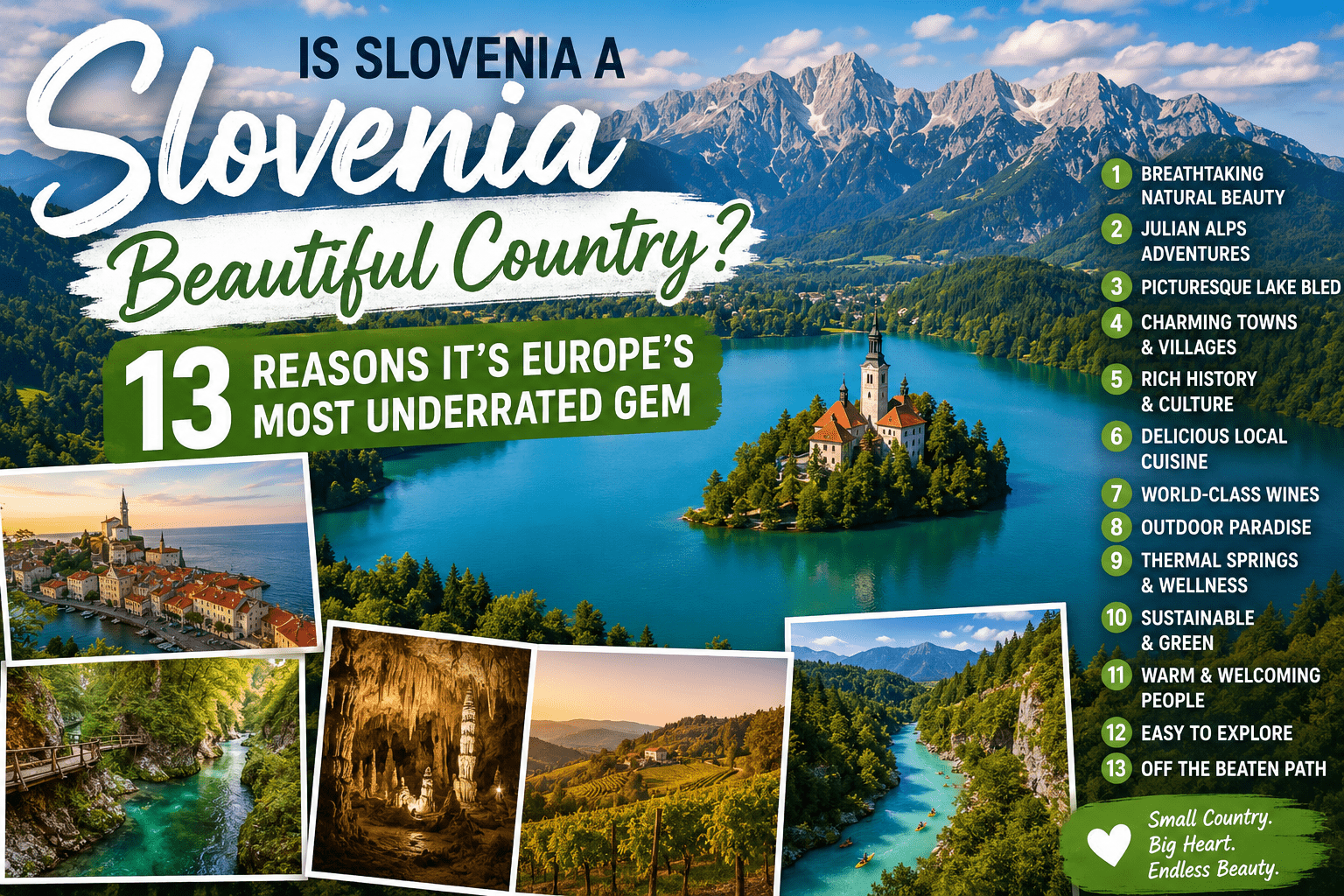
Is Slovenia a Beautiful Country? 13 Reasons It’s Europe’s Most Underrated Gem
This works best for travelers deciding whether Slovenia deserves a spot on their itinerary. It won’t help if you’re looking for a day-by-day trip planner.
Slovenia is beautiful. Not “pretty for its size” beautiful. Actually, genuinely, stop-scrolling beautiful.
The problem isn’t that people doubt it. It’s that most of what they find online is the same two photos — Lake Bled, Ljubljana castle — repeated across a hundred different articles. So the doubt creeps in: is this a real destination or just an Instagram filter?
According to the Slovenian Tourist Board (2023), Slovenia welcomed over 6.7 million tourist arrivals — a 12% jump from the year before. That’s not a fluke. That’s word-of-mouth compounding.
Here are 13 reasons it’s earned every bit of that attention.
What Makes Slovenia Beautiful The Short Answer
Is Slovenia a beautiful country? Slovenia is defined by an extraordinary convergence of landscapes — alpine peaks, emerald rivers, underground cave systems, medieval towns, and a narrow Adriatic coastline — all compressed into an area roughly the size of New Jersey. According to Visit Slovenia (the country’s official tourism authority), travelers can move from mountains to sea in under two hours.
That density of natural beauty is the real answer.
Most travelers assume small European countries mean limited scenery. Slovenia inverts that assumption completely. The smaller the country, the more you can actually see — without burning a week on trains.
Lake Bled and the Julian Alps — Yes, the Hype Is Real
Lake Bled deserves its reputation. The island church, the medieval castle perched on a cliff face, the reflection of snow-capped peaks on still water — it photographs well because it looks like that in real life.
But here’s the thing most Bled articles skip entirely: the lake is just the entrance to the Julian Alps, and the Alps are what will actually stay with you.
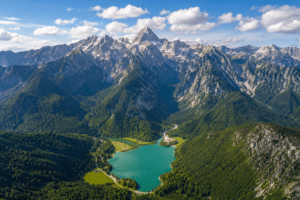
Triglav National Park, Slovenia’s only national park, wraps around the country’s highest peak at 2,864 metres. The Vršič Pass — a winding mountain road built during World War I — offers views that make experienced mountain drivers slow down and stare.
Quick note: if you go in late September, the crowds drop sharply and the colours shift into amber and rust. Possibly the best version of the Alps you’ll ever see.
The Soca Valley The One Most Articles Miss Completely
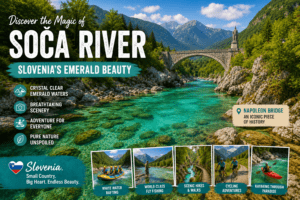
Slovenia is a beautiful country for many reasons, but the Soča River might be the single most visually striking thing in it.
The water is not blue. Not teal. It’s a shade of emerald green that looks artificially enhanced in photos — except it isn’t. The colour comes from glacial minerals dissolving from the riverbed, and it stays that vivid for the entire length of the valley.
To experience the Soča Valley properly, most visitors do this:
- Drive the valley road from Bovec southward toward Kobarid
- Stop at the Napoleon Bridge near Trenta for the first full view
- Kayak or raft the upper river section near Bovec (operators run daily trips in summer)
- End in Kobarid — a small town with a surprising WWI museum and outstanding local restaurants
I’ve seen conflicting data on visitor numbers for this region — some sources cite it as Slovenia’s second most-visited area, others rank it behind the Karst region. My read is that it varies by season. In summer, Soča wins.
Postojna and Skocjan — Underground Slovenia Is Unlike Anything Above It
Most people plan a cave visit as a half-day add-on. They come out two hours later having completely rethought their itinerary.
Postojna Cave is the more famous of the two — over 24 kilometres of passages, explored via a narrow electric train that runs through the first section. The cave system houses the Proteus anguinus, a cave-adapted salamander found almost nowhere else on Earth. That’s the kind of detail that makes a place feel genuinely extraordinary rather than just scenic.
Škocjan is the one that should probably be more famous. A UNESCO World Heritage Site since 1986, it contains one of the largest underground canyons in the world. The river running through its central gorge produces a roar you can hear before you see it.
Both are within an hour of each other in the Karst region. Both are worth it.
Or maybe I should say it this way — if you’re only doing one, do Škocjan. If you can do both, do both.
Piran and the Adriatic Coast — Slovenia’s Most Surprising Secret
Look — if you’re someone who didn’t know Slovenia had a coastline, you’re not alone.
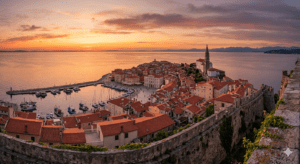
Slovenia’s Adriatic access is narrow — about 46 kilometres of coast. But the town of Piran, sitting on a thin peninsula, is one of the most preserved Venetian-era towns in Europe. The architecture is all narrow alleyways, terracotta rooftops, and sea walls that drop straight into clear water.
Portorož, just south of Piran, functions as the more resort-oriented option for those who want beaches and amenities. Piran is for the architecture and the evening light.
Most people assume Slovenia is a landlocked mountain country. The data — and the coastline — says otherwise.
Ljubljana — Europe’s Most Liveable Capital Nobody Talks About
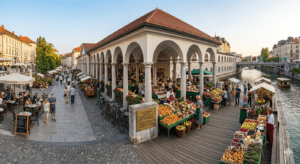
Ljubljana was named European Green Capital in 2016 by the European Commission. The city centre has been largely car-free since 2007. That policy decision changed the character of the whole downtown — the river embankment became a long stretch of outdoor restaurants and bookshops, not a traffic corridor.
The castle sits above it all on a forested hill. The cable car up costs about €6. The view from the top is the kind of thing you take fifty photos of and none of them quite capture.
Some experts argue Ljubljana doesn’t have the cultural weight of Prague or Vienna — and that’s a fair point for visitors specifically chasing museum depth. But if you’re after atmosphere, livability, and a city that actually feels good to walk through, the comparison doesn’t hold.
Ptuj, Radovljica, Škofja Loka — The Towns Worth the Detour
Here’s the honest version of this section: most Slovenia itineraries skip these entirely. That’s a mistake.
Ptuj is Slovenia’s oldest town, with a hilltop castle overlooking the Drava River. Škofja Loka has one of the best-preserved medieval cores in Central Europe. Radovljica sits 20 minutes from Bled and has almost no tourist infrastructure — which means it looks exactly as it has for centuries.
These are not consolation prizes for when the main sites are crowded. They’re the places that actually change how a destination feels to a traveler.
Sustainability and Green Travel — Why Slovenia Leads Europe Here
Slovenia vs Other European Destinations: Slovenia is better suited for eco-conscious travelers because over 60% of the country is forested and the government has legally protected large portions of that land since 1981. Other popular European destinations offer green tourism marketing; Slovenia has codified environmental protections. The key difference is policy depth versus brand positioning.
The country also actively markets Airbnb Experiences Slovenia-style rural stays — farmhouse tourism (‘tourist farms’) is a formal, regulated sector here, not an informal trend. You can book a night in a working alpine farm, eat what’s grown on the property, and wake up to Triglav in the window.
That’s not a niche offering. It’s infrastructure.
How Slovenia Compares to Other European Destinations
| Option | Best For | Key Benefit | Limitation |
|---|---|---|---|
| Slovenia | Landscape variety + low crowds | Alps, coast, caves all in 2 hrs | Limited nightlife / city options |
| Croatia | Coastal holidays, island-hopping | Adriatic beach access | Peak season overcrowding |
| Austria | Alpine skiing, classical culture | Vienna depth, Salzburg | Higher cost across the board |
| North Macedonia | Budget Balkans travel | Very low prices, Lake Ohrid | Less infrastructure |
| Switzerland | Luxury Alpine experience | Best mountain access in Europe | Expensive for most travelers |
Quick Comparison — Based on publicly available tourism data and visitor reviews as of 2025–2026
What Travelers Actually Experience — A Realistic Take
Users who’ve traveled Slovenia on a mid-range budget (€80–120/day) consistently report the same thing: the density surprised them. The expectation was one or two standout moments. The reality was ten.
What most guides skip is the transition experience — driving between Bled, Bohinj, and the Soča Valley in a single day. The landscape changes completely every 40 minutes. That variety, in a country you can cross in under three hours, is genuinely unusual in Europe.
Lonely Planet’s Slovenia guide (current edition) emphasises this as the country’s primary selling point — not any single site, but the compactness that lets you experience all of them.
Voice Search Q&A
Q: What’s the best time to visit Slovenia for good weather? A: Late June through early September for warmest temperatures. Late September offers lower crowds and autumn colour. Avoid August weekends at Lake Bled — visitor numbers spike sharply.
Q: How many days do I need to see Slovenia properly? A: Seven days covers Ljubljana, Lake Bled, the Soča Valley, and the Karst caves comfortably. Ten days adds the coast and medieval towns without rushing.
Q: Is Slovenia safe for solo travelers? A: Slovenia consistently ranks among Europe’s safest countries. The 2024 Global Peace Index placed it in the top 15 globally. Solo travel — including for women — is widely reported as low-stress.
Q: Why does the Soča River look so green? A: The colour comes from dissolved glacial minerals in the riverbed combined with the river’s clarity and depth. It’s natural and consistent year-round, though most vivid in summer light.
Q: Should I rent a car in Slovenia or use public transport? A: Rent a car. Public transport connects major cities adequately, but the Soča Valley, Karst region, and alpine villages are either inaccessible or significantly limited without your own vehicle.
The Honest Summary
Slovenia is a beautiful country — by almost any measure you’d apply to a travel destination.
It’s not the flashiest. It doesn’t have a Colosseum or a Sagrada Família. What it has is harder to manufacture: genuine landscape variety, a functioning ecological identity, and the kind of towns that don’t feel staged for tourism.
That 12% visitor growth isn’t marketing. It’s travelers coming back and telling someone.